Agriculture News

chatgpt image sep 25, 2026, 11 20 40 am
Agriculture News

Farmers Walk Out of Grievance Redress Meeting Demanding Complete Crop Loan Waiver

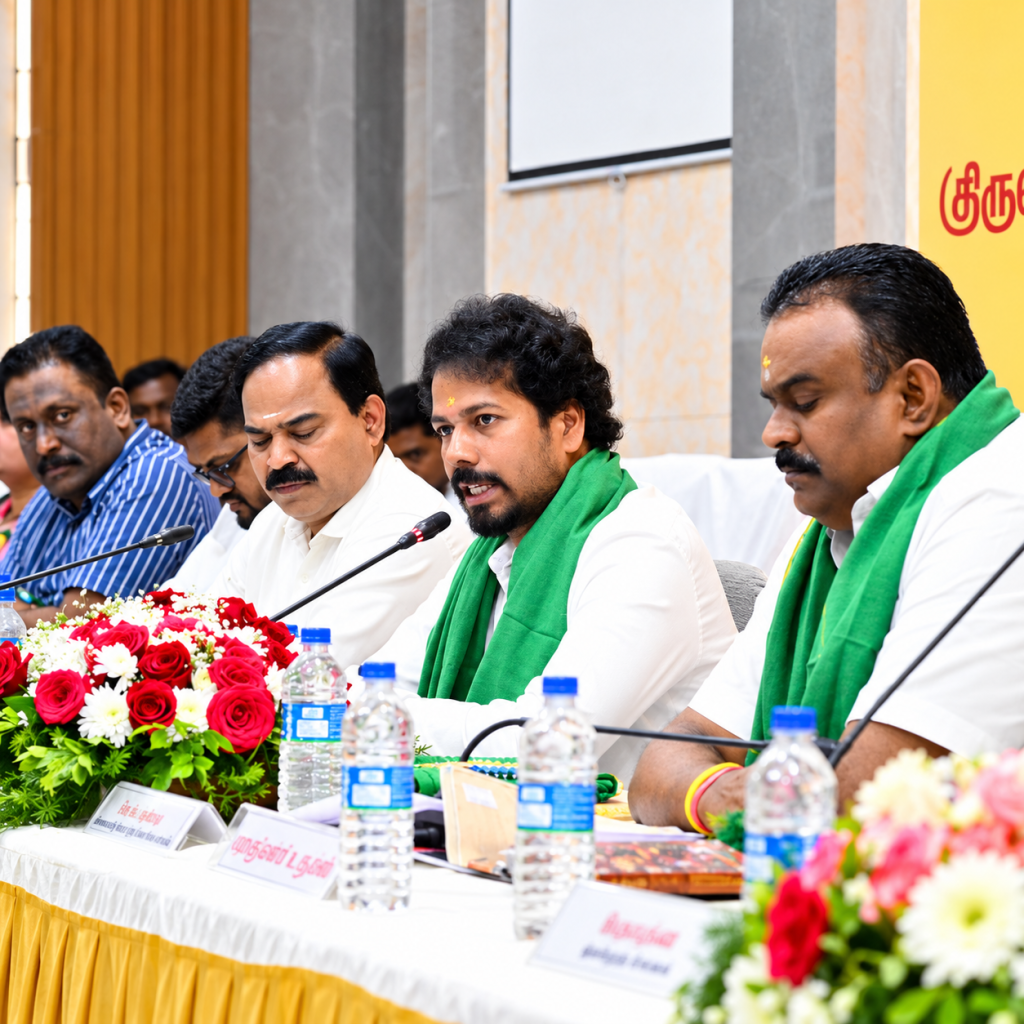
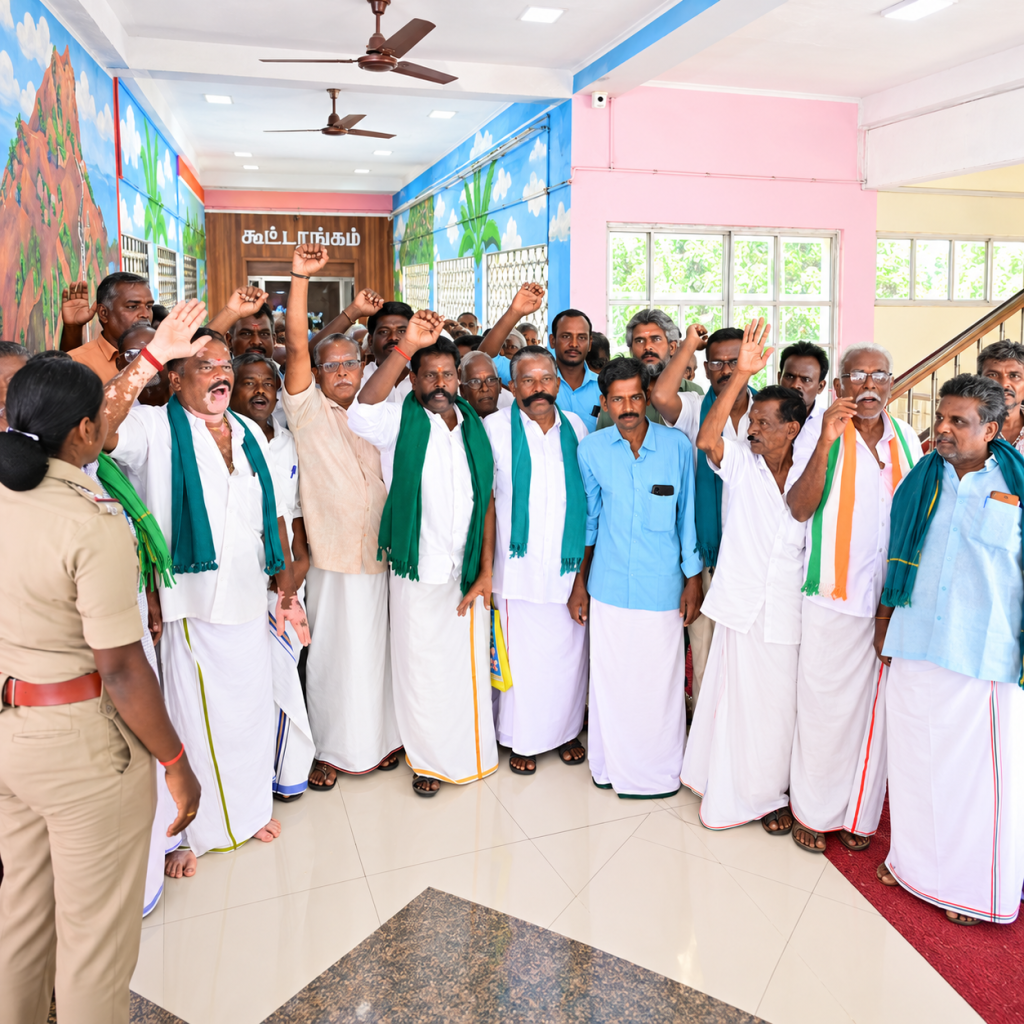
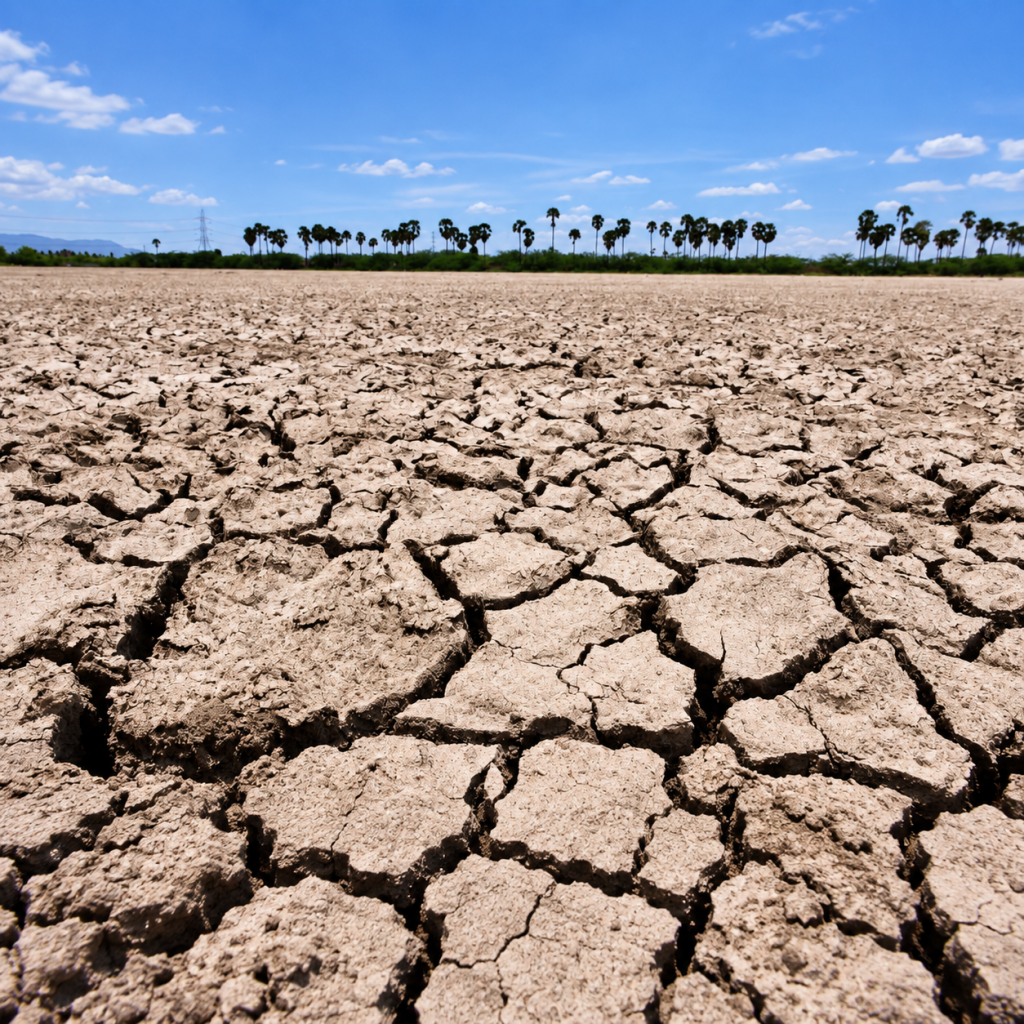
Farmers in Dindigul district staged a walkout from a farmers’ grievance redress meeting at the Dindigul Collectorate on September 18, 2026, demanding that the Tamil Nadu government completely waive crop loans. The meeting was chaired by District Collector Durgamoorthi, but a section of farmers left shortly after proceedings began to press their demands. The farmers said the continuing drought-like conditions in Dindigul had severely affected cultivation and household finances, making it difficult for many of them to repay agricultural loans. They also repeated their demand that Dindigul be officially declared a drought-hit district, arguing that water scarcity and crop losses had placed farmers under significant financial pressure. Another major concern was the condition of coconut plantations, which farmers said had been badly affected by prolonged dry weather. They requested that officials conduct a proper field survey, assess losses and provide suitable compensation to affected growers. Water availability was a central issue during the meeting. Farmers urged authorities to explore bringing Cauvery water to the district, while officials said a proposal was under consideration to supply water to around 60 irrigation tanks. The Collector said ensuring adequate drinking water for the public remained a priority for the district administration. Farmers also complained that wild animals were entering agricultural lands in search of water because natural water sources had dried up. They asked for waterbodies to be desilted so they could store more rainwater and provide better support for both agriculture and local ecosystems. Other demands included the removal of encroachments from lakes and tanks and strict action against unauthorised soil extraction from waterbodies. The Collector said action would be taken against illegal extraction and noted that the removal of seemai karuvelam (Prosopis juliflora) was already being carried out across blocks in the district. The September protest followed earlier demands from Dindigul farmers for crop-loan relief. In May, farmers had already argued that waiver calculations should better support small and marginal farmers, while protests in June also called for cooperative crop loans to be waived. Overall, the walkout reflected growing concern over drought, falling water availability, crop losses and farm debt in Dindigul. Farmers said they want a combination of complete crop-loan relief, drought recognition, compensation for damaged crops and stronger water-management measures to help agricultural families recover.
chatgpt image sep 25, 2026, 11 14 33 am
Agriculture News

Farmers Demand Dindigul District Be Declared Drought-Hit

Farmers’ associations across Dindigul district have urged the Tamil Nadu government to officially declare the district drought-hit, citing prolonged rainfall shortage, falling groundwater levels and the drying up of irrigation tanks and reservoirs. The demand intensified during farmers’ meetings in July and September 2026, as agricultural activities became increasingly difficult in several parts of the district. India Live Farmers said that around 70 water tanks had completely dried up and that there had been little or no inflow into reservoirs because catchment areas had not received sufficient rainfall. They argued that the resulting shortage of irrigation water had reduced cultivation, damaged standing crops and caused substantial financial losses. India Live The water crisis has also affected drinking-water supplies. At Dindigul Corporation Council meetings, councillors complained that many localities were not receiving water regularly and asked authorities to maintain supply through tankers where necessary. Residents from several parts of the district have also submitted petitions and staged protests seeking measures to address the shortage. India News Live Farmers have demanded compensation for crop losses and a complete waiver of crop loans, saying many cultivators have been unable to earn enough from agriculture under the prevailing conditions. At a grievance-redress meeting on September 18, a section of farmers staged a walkout and again pressed the government to declare Dindigul drought-hit. They also sought an official survey of drought-affected coconut trees so that eligible farmers could receive relief. dnxguru.com Farmers have additionally called for desilting of tanks and irrigation channels, removal of encroachments from waterbodies and better long-term water-management measures. Some also requested that water from the Cauvery be brought to the region. Officials said a proposal was under consideration to bring water to about 60 irrigation tanks, while the District Collector said drinking-water supply would remain a priority. India Live The effects of the shortage were already visible earlier in the agricultural season. In July, the usual kuruvai paddy cultivation area of roughly 900–1,100 hectares in Dindigul had fallen to about 500 hectares, as low storage in the Vaigai and Mullaperiyar systems limited irrigation availability. The New Indian Express The farmers’ central demand is that an official drought declaration should be followed by crop-loss compensation, loan relief, improved drinking-water supply and restoration of irrigation infrastructure. As of the latest reports cited here, farmers were continuing to press these demands while district authorities focused on drinking-water measures and assessment of affected areas.

chatgpt image sep 25, 2026, 11 11 00 am
Agriculture News

Gale, Heavy Rain Flatten Ripe Paddy and Destroy Crops in Theni and Dindigul Districts

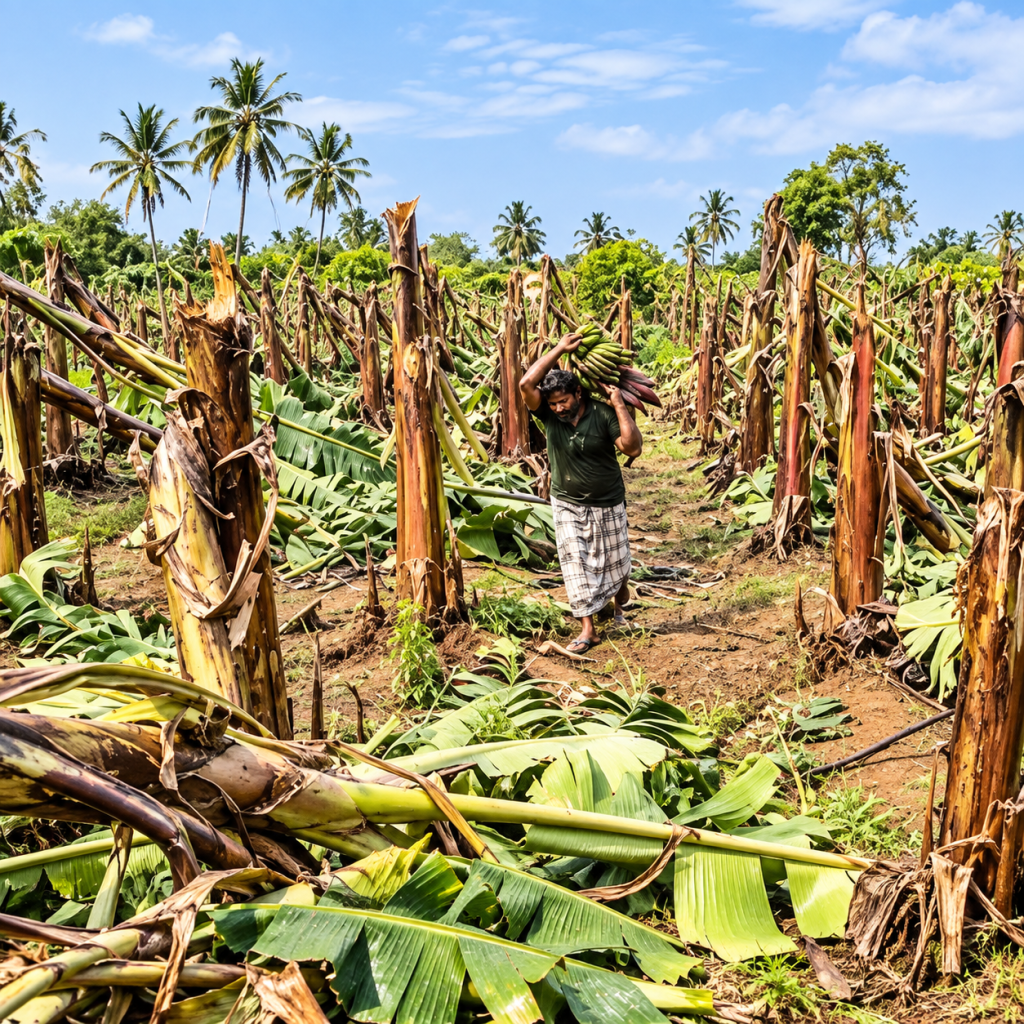
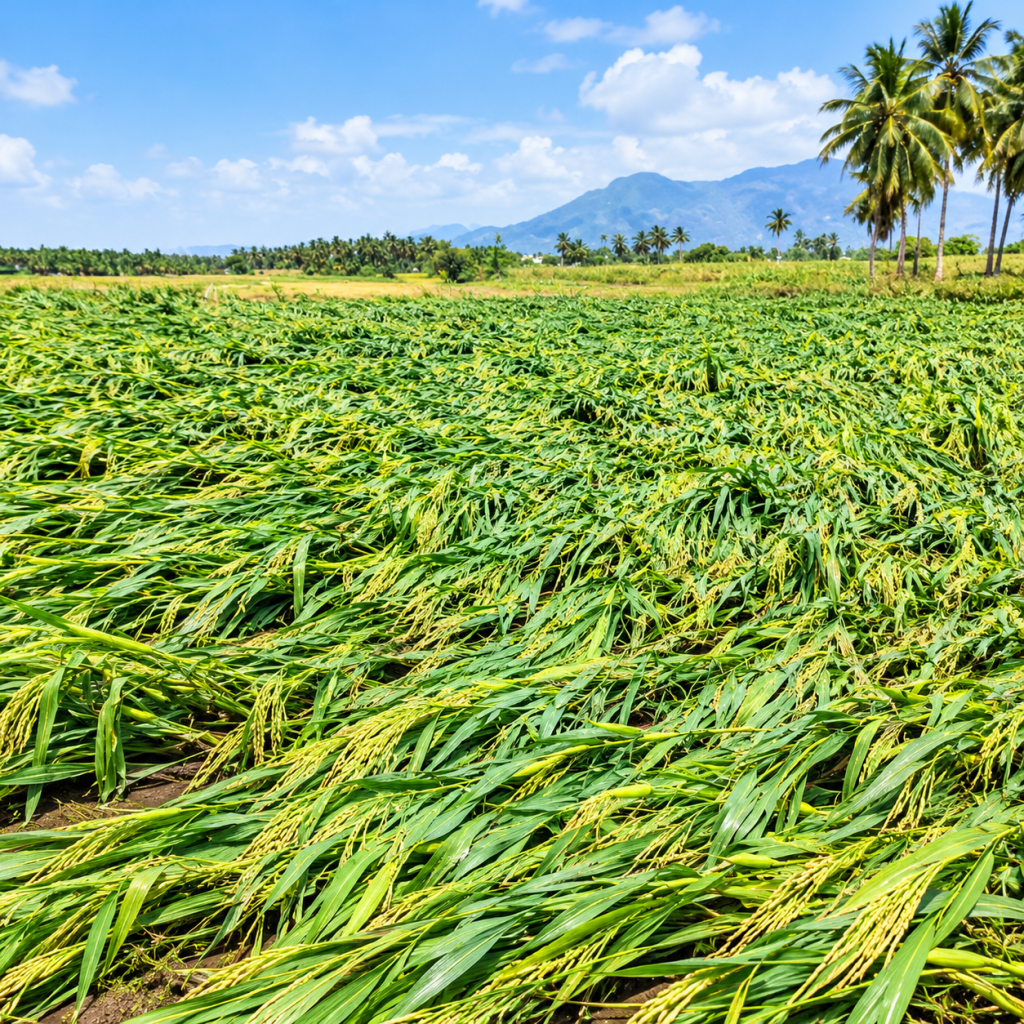
Strong winds accompanied by heavy unseasonal rain at the end of April 2026 caused extensive agricultural damage across parts of Dindigul and Theni districts. Harvest-ready paddy fields were flattened, while banana, mango, coconut, maize, lemon and drumstick crops were damaged or uprooted. Agriculture and Revenue Department officials subsequently began inspecting affected farms to assess the losses. In Dindigul district, some of the worst paddy damage was reported around Balasamudram, Kurumpadi, A. Kalaimuthur and Thamaraikulam near Palani. Farmers said two spells of rain and strong winds on April 30 damaged crops that were only days away from harvest. One farmer from Thamaraikulam said he had invested more than ₹1.5 lakh in a four-acre paddy field and had expected to harvest during the second week of May before the crop was flattened. The Palani region, known for cultivating mattai arisi rice that is also traded with buyers in Kerala, suffered substantial losses. Farmers had reportedly spent more than ₹30,000 per acre on fertilisers, sowing, field preparation and other cultivation expenses after planting during October–November. Because the crop was almost mature, the storm struck at a particularly damaging stage of the season. Maize fields in Ponnapuram and parts of Balasamudram were also affected. Damage was not limited to paddy. In Sirumalai, officials reported that several dozen acres of banana plantations, drumstick crops and lemon trees had been damaged by the severe weather. Separate reports also indicated that around 800 acres of paddy in the Palani area were inundated or flattened, while banana, coconut and maize cultivation sustained losses. Theni district also experienced major damage. In villages across Periyakulam taluk, mango and coconut plantations were hit, with approximately 80 mango trees and 90 coconut trees reportedly uprooted. Banana plantations growing red and Nendran varieties were damaged in areas including Uthamapalayam, Surulipatti and Kamayagoundanpatti. A follow-up assessment showed that Theni was among the hardest-hit districts for banana cultivation, with gusty winds reportedly damaging plantations across at least 2,000 acres. Farmers who had spent months raising the crop said the destruction came close to harvest, leaving them facing significant losses with little opportunity to recover their investment from the damaged plants. Farmers and their associations urged the Tamil Nadu government to provide compensation and crop-insurance assistance. At a later farmers’ grievance meeting in Theni, growers specifically asked authorities to ensure compensation for damaged coconut and banana crops and help them obtain insurance settlements without prolonged delays. Agriculture and revenue officials said inspections of the affected areas had been carried out and that additional verification of land and crop records would be completed before determining relief. Officials said appropriate action would follow once the final extent of crop damage was established.

chatgpt image sep 25, 2026, 11 07 37 am
Agriculture News

Storm and rain damage crops in DIndigul; farmers seek relief

Heavy rain accompanied by strong winds caused extensive crop damage across parts of Dindigul district on April 30, 2026, affecting paddy, banana, coconut, maize and drumstick cultivation. Farmers’ representatives said many crops were close to harvest when the sudden weather damaged fields, creating significant financial losses. In the Palani area, around 800 acres of paddy fields were reported damaged after heavy rain and stormwater affected crops that were nearly ready for harvest. The Tamil Nadu Farmers’ Association estimated losses in the area at approximately ₹2 crore and called for immediate inspection by revenue and agriculture officials. Farmers in Ponnapuram and nearby villages also reported damage to coconut, banana and maize crops. According to the farmers’ association, the storm affected agricultural areas within roughly a five-kilometre radius in parts of Dindigul, with some individual farmers reporting losses of up to ₹5 lakh. Banana growers were among the worst affected. In Vellodu, Kombai, Ellapatti, Velankannipuram, Karadipatti and Narasingapuram, farmers had cultivated red bananas over more than 100 acres. Around 75 acres of plantations that were ready for harvest were reported completely damaged, with estimated losses reaching about ₹5 lakh per acre. Paddy farmers in villages including Balasamudram, Puthu Achu, Kurumbapatti, A. Kalaiyamuthur and Thamaraikulam also suffered losses after fields were submerged. Crops valued at nearly ₹2 crore were reported affected in these areas, according to the farmers’ association. The severe weather also affected people beyond agriculture. On the same day in Palani, strong winds and rain caused a temporary shelter near Idumban Kulam to collapse, injuring 27 devotees, including five children, illustrating the intensity of the storm in parts of the district. Following the agricultural losses, Tamil Nadu Farmers’ Association district president N. Perumal and district secretary M. Ramasamy urged the Dindigul District Collector to arrange an immediate damage assessment and provide compensation to affected farmers. They specifically requested coordinated action from the Revenue and Horticulture Departments so that relief could reach farmers who had lost crops just before harvest. The incident highlighted the vulnerability of Dindigul’s farming communities to sudden pre-monsoon storms, particularly when mature crops are standing in the fields. Farmers said timely crop-loss surveys, compensation and stronger disaster-relief support would be essential to help them recover from the losses.

chatgpt image sep 25, 2026, 11 04 41 am
Agriculture News

Tensions rise in TN village after farmer’s killing over grazing dispute

Tension gripped Poombarai village near Kodaikanal in Dindigul district after a 26-year-old man, Ramar, was killed on July 30, 2026, following a long-running dispute over a horse allegedly entering and grazing in a local farmer’s agricultural land. Police said the disagreement had been continuing for several months between Ramar and farmer J. Raghu. According to police accounts, Ramar and his relative or companion Prashanth were taken to an area near agricultural fields, where an argument escalated into violence. Ramar suffered fatal injuries and died at the scene, while Prashanth was seriously injured and taken for treatment. Reports differ on Prashanth’s age, describing him as either 20 or 24. The incident led to protests and a road blockade involving more than 100 people, including Ramar’s relatives and members of his community. Demonstrators blocked the route connecting Poombarai with upper-hill villages such as Mannavanur, demanding the arrest of everyone they believed was involved and alleging that the attack had involved more people than the main suspect alone. Police said Raghu surrendered at a police station after the incident. Because the victim and accused belonged to different communities, authorities deployed additional police personnel in and around Poombarai amid fears of further tension. Several two-wheelers were also reportedly damaged during disturbances following the killing. Senior police officers held talks with the victim’s family and protesters in an effort to restore calm. Some activists and residents also demanded greater security for vulnerable communities and stronger policing in Poombarai, while authorities continued investigating the circumstances of the killing and whether other individuals were involved. The case remains based on police allegations and an ongoing investigation; responsibility of any accused person would ultimately have to be established through the legal process.

chatgpt image sep 25, 2026, 11 01 18 am
Agriculture News

Agriculture Budget to Be Planned According to Regional Needs, Says Tamil Nadu Minister

Tamil Nadu Agriculture and Farmers Welfare Minister R. Vinoth said the State’s 2026–27 Agriculture Budget would be designed around the different agricultural conditions and requirements of individual regions rather than applying a single uniform approach across Tamil Nadu. He made the remarks during a farmers’ consultation meeting held at the Tirunelveli District Collectorate on July 11, 2026. The meeting brought together farmers and representatives from 10 southern districts — Tirunelveli, Tenkasi, Kanniyakumari, Thoothukudi, Virudhunagar, Ramanathapuram, Sivaganga, Madurai, Theni and Dindigul. Participants were invited to explain local farming problems, crop conditions and infrastructure requirements and to suggest measures they wanted considered in the State Agriculture Budget. Vinoth said regional differences in soil, irrigation availability, crops, rainfall patterns, market access and agricultural practices meant that policies needed to reflect local conditions. He said the government’s consultation process was intended to collect suggestions directly from farmers, agricultural associations and other stakeholders before finalising programmes. Similar consultations had also been conducted in other regions of Tamil Nadu. Among the areas highlighted during the consultation were quality agricultural inputs, integrated farming, natural farming, soil and water conservation, crop insurance, mechanisation, marketing facilities and price protection for agricultural produce. The government also discussed improving cold-storage and value-addition infrastructure to reduce post-harvest losses and help farmers market their produce more effectively. The Minister said Tamil Nadu had set a foodgrain production target of 131.36 lakh metric tonnes for 2026–27. Programmes mentioned in connection with that target included initiatives relating to pulses, edible oils, food and nutrition security, expansion of cultivated area and wider adoption of agricultural technologies intended to improve productivity and respond to climate-related risks. The consultation process later concluded after suggestions from all 38 districts were compiled. The State subsequently presented its revised 2026–27 Agriculture Budget on August 6, 2026, including measures covering crop insurance, irrigation, farmer income support and district-level agricultural contingency planning. For districts such as Dindigul and Theni, the regional approach was intended to give farmers an opportunity to raise location-specific concerns about irrigation, horticulture, storage, marketing, crop prices and other agricultural needs. The Minister’s stated position was that these consultations would inform the final design of State agricultural programmes rather than relying solely on a statewide one-size-fits-all model.

chatgpt image sep 25, 2026, 10 55 58 am
Agriculture News

Digital Crop Survey Completed on Just 60% of 2.47 Lakh Hectares in Dindigul

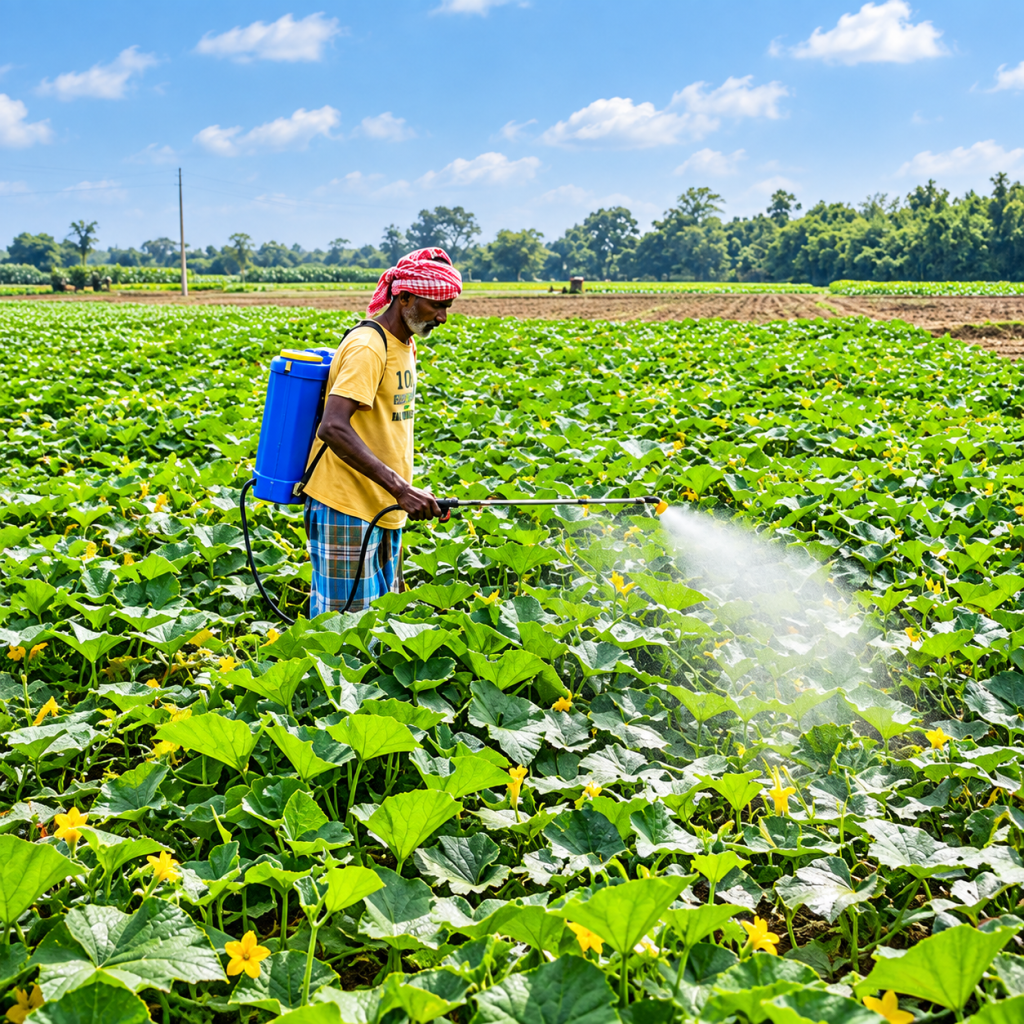
The Digital Crop Survey (DCS) in Dindigul district has reached only about 60% coverage, even as the original September 30, 2026 deadline approaches. The district has around 2,47,600 hectares under cultivation, including approximately 1,03,000 hectares of horticultural land, making the survey a large and time-consuming exercise for field officials. The survey, which began in July 2026, is being carried out by officials from the Agriculture and Horticulture Departments along with registered volunteers. Its purpose is to collect accurate, real-time information about crops cultivated by farmers so that the government can improve agricultural planning, policy decisions and distribution of welfare benefits. Officials use the Crop Survey (O) App developed by TNeGA and the Uzhavan App while visiting individual agricultural fields. A major challenge is the shortage of personnel. Officials said Dindigul has only around 210 agriculture and horticulture officers available for the extensive fieldwork. A single officer can reportedly cover roughly 10–20 hectares and complete around 100 entries in a day, making it difficult to survey such a large cultivated area within the deadline. Travel between villages, individual survey-number subdivisions and remote farms further slows the process. Volunteers were expected to help speed up the work, but officials said participation has remained limited. Volunteers are reportedly paid ₹3 for each survey entry, which authorities say has not attracted enough people for the scale of work required. As a result, agriculture and horticulture officers have been carrying much of the survey workload themselves. The digital system uses GPS-based geo-fencing and satellite imagery to identify and verify individual agricultural plots. Field officers also photograph crops, and the images are stored with their geographic coordinates. Although this technology helps improve accuracy, officials still have to physically visit the subdivisions within each survey number, making the process labour-intensive. Tamil Nadu Farmers Association’s Dindigul district president A. Ramasamy said the survey is valuable because reliable field-level crop information can improve government planning and farmer-support schemes. However, he said the size of the district and the large number of individual land parcels have made completing the survey within the original schedule difficult. Agriculture officials have acknowledged that the September deadline is unlikely to be met. They plan to request an additional two to three weeks from higher authorities and expect the remaining survey work to be completed by the end of October 2026. Once finished, the digital database is expected to provide a more accurate picture of crops grown across Dindigul and help authorities make better decisions on agricultural assistance, planning and welfare distribution.